Choosing Between Next.js and Vite: A Decision, Not a Preference
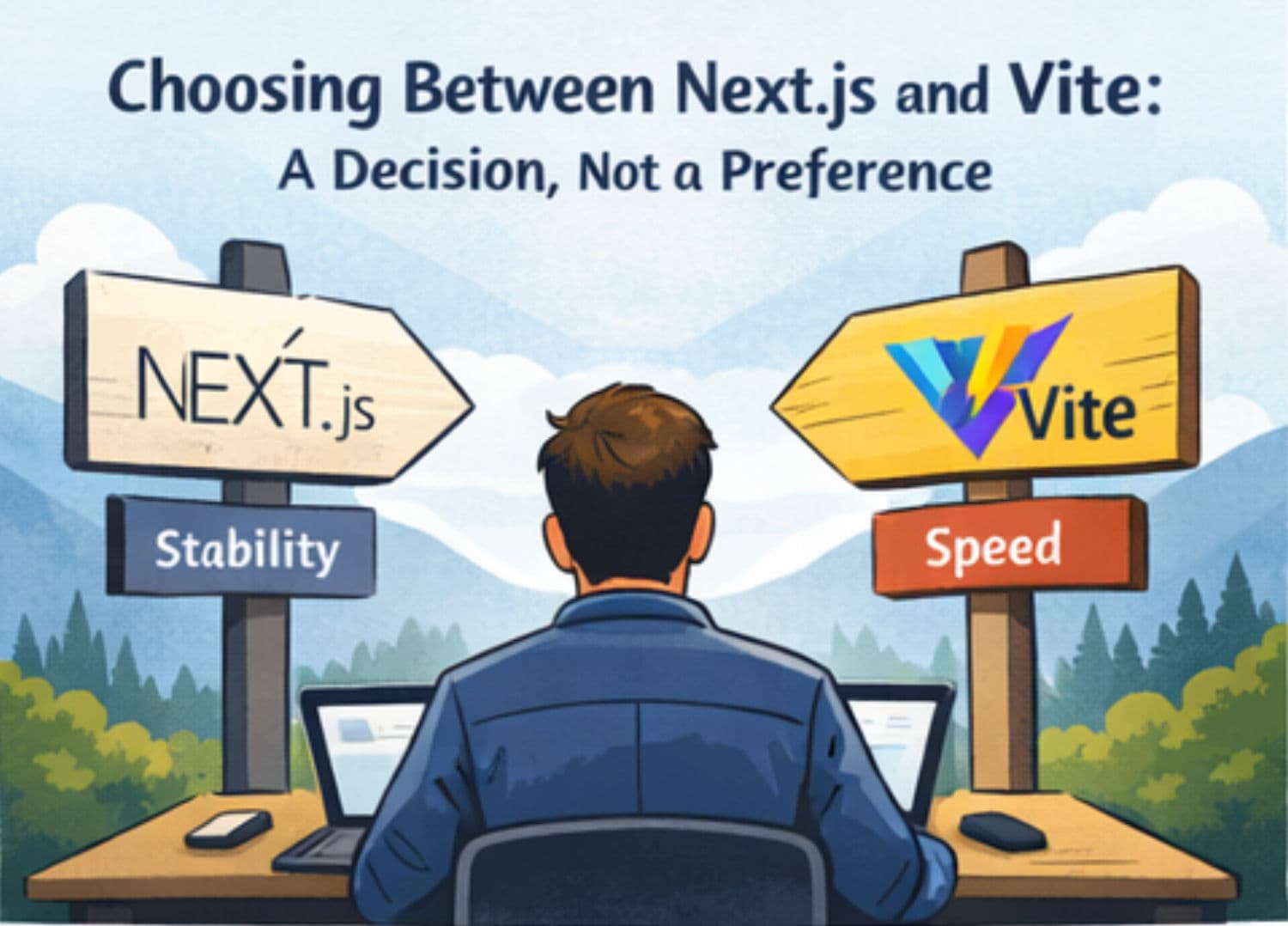
When starting a new frontend project, the hard part is usually not how to use a framework, but which framework to choose and why.
Today, there are many frontend frameworks. Most of them are free, stable, and good enough for real products. We have Next.js, Vite, Astro, Vue, Angular, and more. The real problem is not quality, but context.
Because my experience is mostly in the React ecosystem, and to keep this article focused, I will only talk about Next.js and Vite. Not because other frameworks are bad, but because technical decisions are easier to understand when the scope is clear.
Website vs Web App: The Root of Every Decision
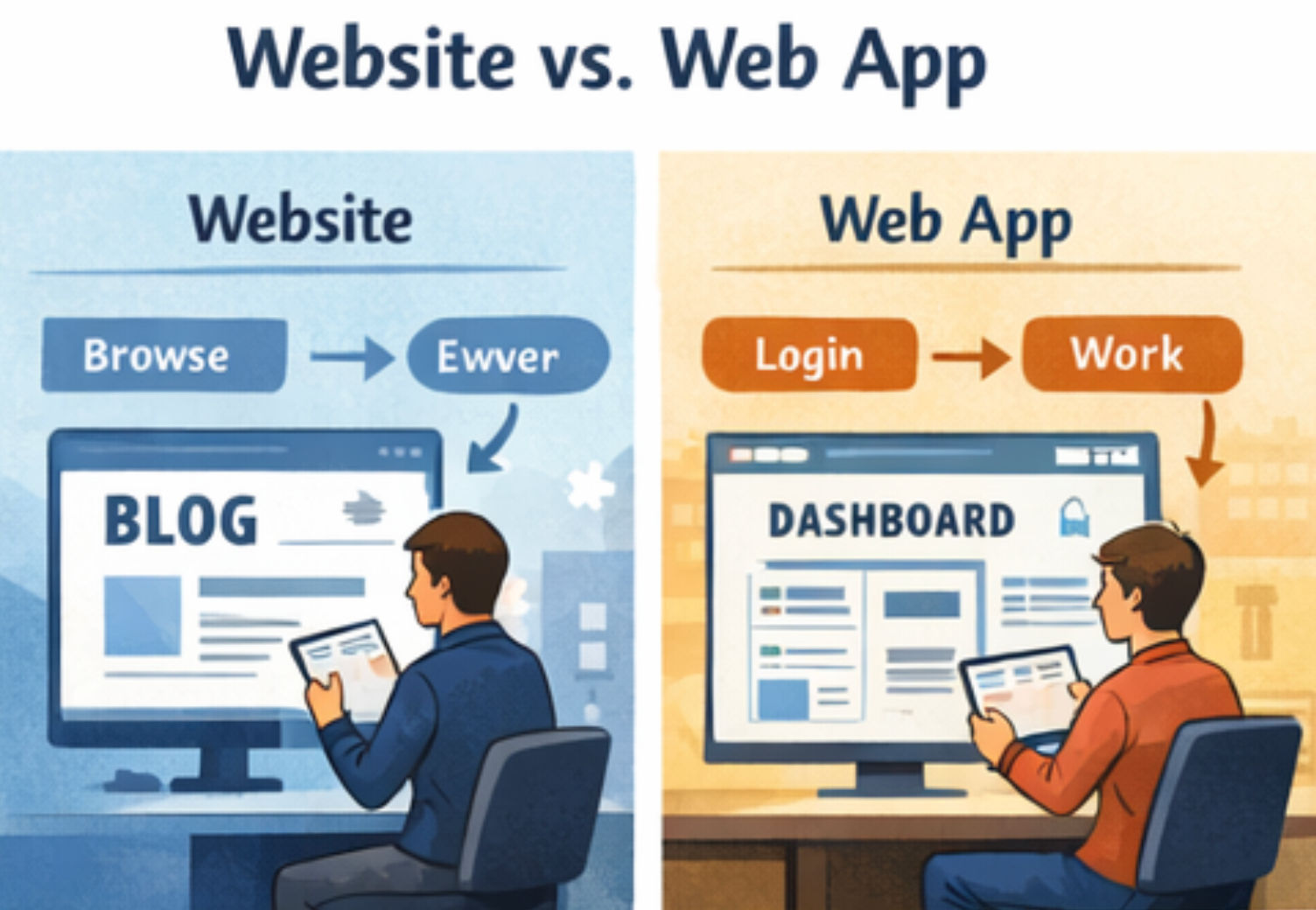
Before comparing Next.js and Vite, there is one important question to answer: Are we building a website or a web app? This sounds simple, but many teams get this wrong.
A website is mainly about content. Users visit, read something, and leave. The usual pattern is: visit → read → leave.
Examples:
- blogs
- landing pages
- company websites
- news sites
A web app is mainly about interaction. Users log in, do tasks, click around, and stay longer. The pattern is: login → work → stay.
Examples:
- dashboards
- admin panels
- SaaS products
- internal tools
Once you understand this difference, many technical decisions become clearer.
Rendering Strategy: What Problem Is the Framework Solving?
After you know what kind of product you are building, the next question is:
When and where is the UI created?
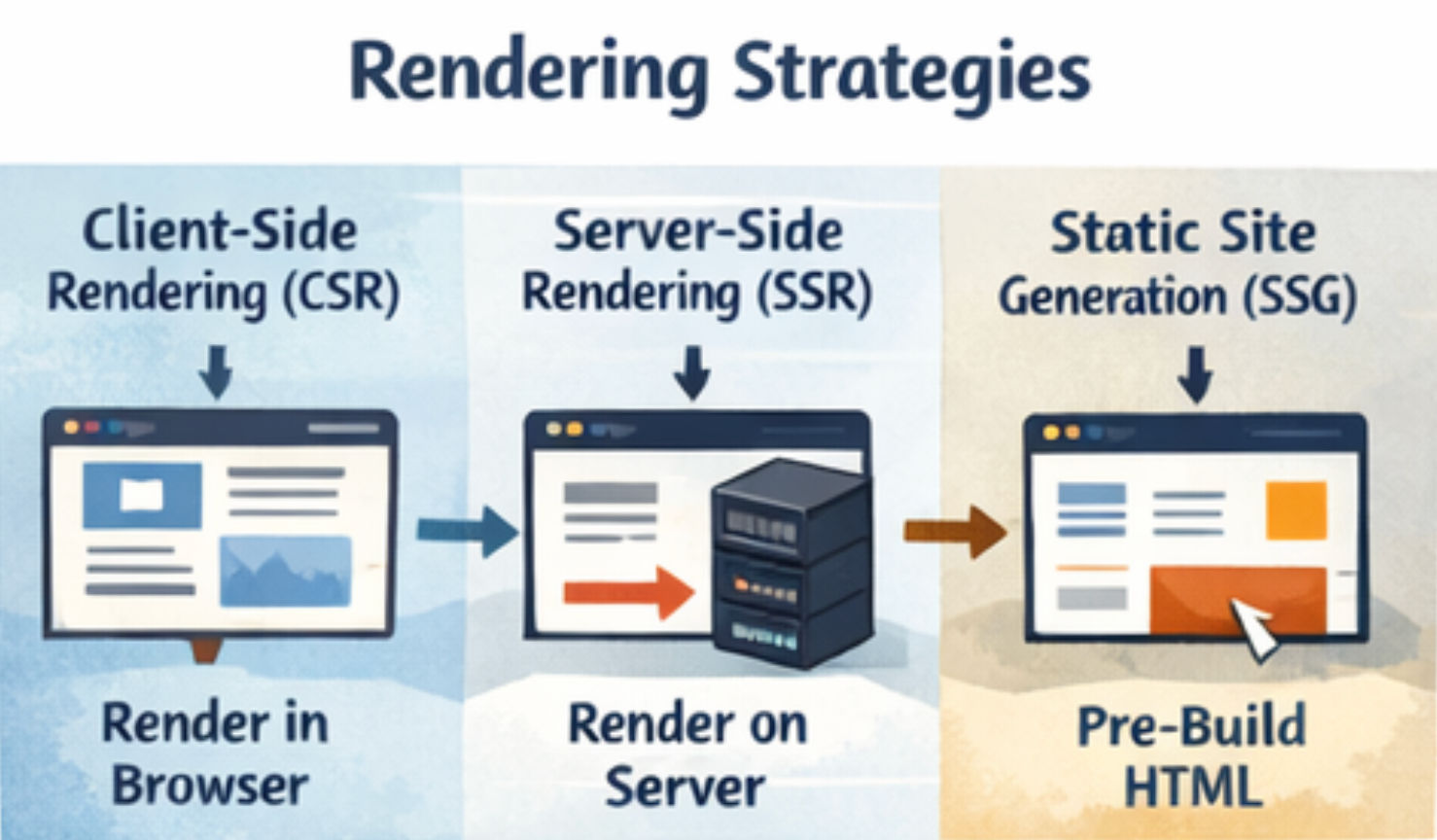
This is called a rendering strategy.
Public websites need content to show up immediately. Users do not want to wait for JavaScript to load. Search engines also need ready HTML to read.
Web apps care more about fast interaction. The goal is not who shows content first, but who feels fast after loading.
Next.js and Vite exist because they focus on different needs.
Why Next.js Feels Heavy During Development
Many developers feel that Next.js is slow during development. Page changes feel slower, hot reload takes longer, and laptops get hot.
This is not a bug. It is a design choice.
In development mode, Next.js:
- runs server-side rendering
- rebuilds many internal graphs
- enables React Strict Mode
- tries to behave like production
The goal is simple: find problems early, before production.
Next.js trades development speed for:
- safety
- consistency
- stable production behavior
Why Vite Feels Fast and Easy
Vite feels very fast during development because it does very little work.
In dev mode, Vite:
- does not bundle the app
- does not run server-side rendering
- serves files to the browser only when needed
Modern browsers do the rest.
The result:
- instant hot reload
- fast feedback
- developers can focus on UI and logic
Vite trades production features for developer experience.

Bundling, SSR, and the Complexity Budget
Every advanced feature has a cost.
Server-side rendering adds:
- more complexity
- more server work
- harder debugging
Bundling adds:
- longer build times
- heavier tools
- slower feedback in development
The real question is not “can we use it?”, but “is it worth it for this product?”
Many small projects fail not because the tools are bad, but because they start too complex too early.
Common Mistakes When Choosing a Framework
Some mistakes happen again and again:
- using Next.js for internal dashboards
- using Vite for SEO-heavy websites
- choosing a framework because it is popular
- using the same stack for every project
A framework is not your identity. It is just a tool.
When to Use Next.js and When to Use Vite
Use Next.js if:
- you are building a public website
- SEO is very important
- first load speed matters
- content must be visible quickly
Use Vite if:
- you are building a web app
- users must log in first
- interaction is more important than SEO
- developer speed matters
If you are unsure, the simpler option is often the safer one.
Choosing a frontend framework is not about preference or trends. It is about understanding the problem, accepting trade-offs, and owning the result.
When that decision is clear, almost any framework can be the right choice.